Among the many treasures of New York City, the iconic Carnegie Hall in Midtown Manhattan ranks among the best. With its storied history filled with music greats, the concert hall today remains one of the finest and loveliest places to hear beautiful music.
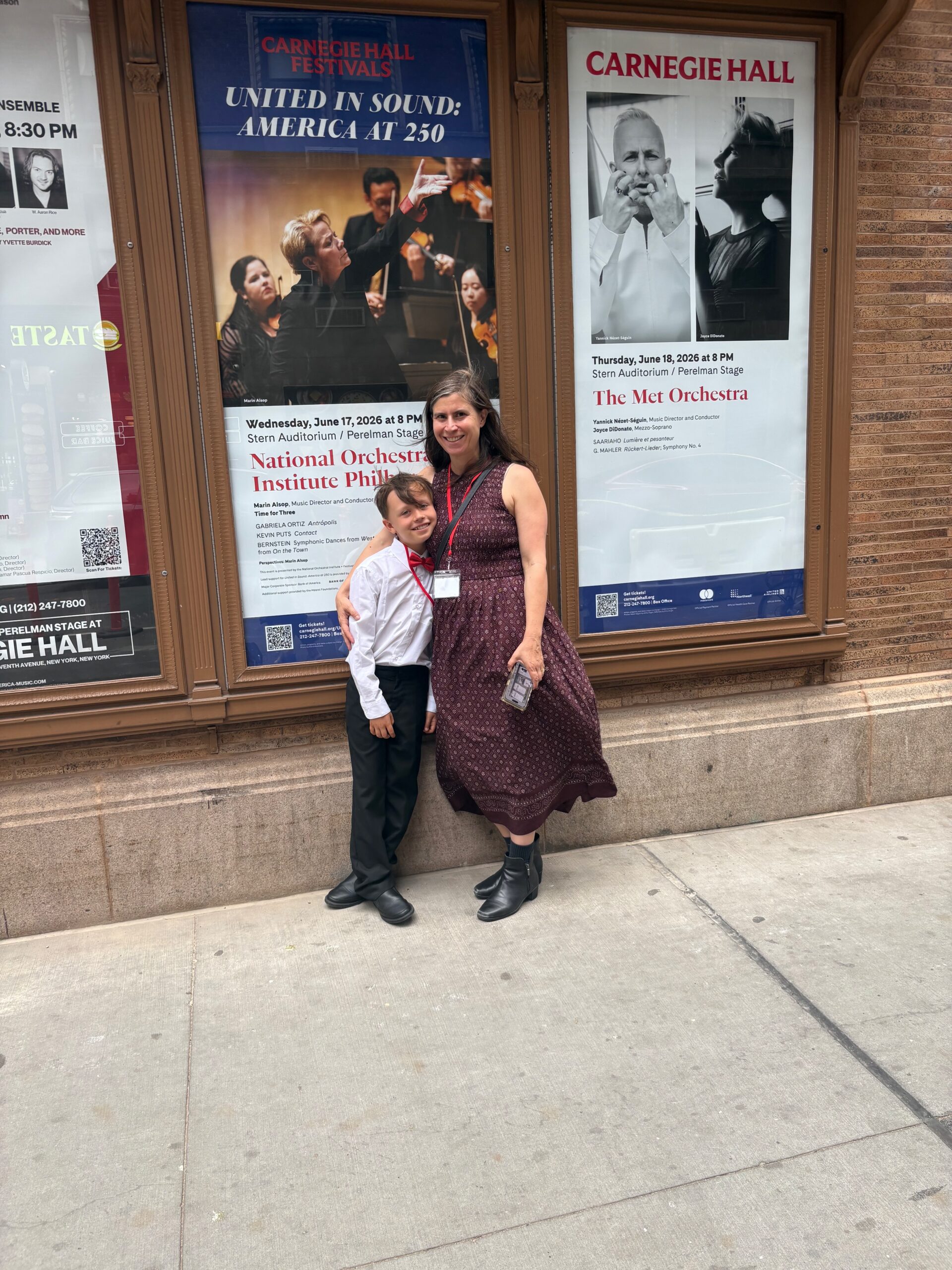
Last month, I had the privilege of visiting Carnegie Hall with family, where my 10-year-old grandson was part of a performance sponsored by New York’s The School for Strings in the Isaac Stern Auditorium. The New York School for Strings extended the invitation to the Brooklyn Conservatory of Music, which my grandson attends as a student of Suzuki-based violin.
When one pictures the magnificent Carnegie Hall, it is likely a vision of world-famous musicians performing many types of music on the stage of one of its concert halls. But it is also a home for the community, where children as young as three may be part of a performance.
The School for Strings graduation concert fell in this category. The concert included 300 young cellists and 350 violinists. Given what could have been a mob scene, the organization and timing of the arrival and staging of 650 young musicians on the Ronald Perelman stage was masterful.
The cellists, gathered all together, played pieces composed by Breval, Schubert, Hande, Bach, Suzuki and others. With an interlude by the School for Strings Alumni Orchestra, the violinists were next.
So how do 350 young violinists all fit on one stage? They don’t. This is where magical coordination happened. The Play-Down started with a row of older, more experienced violinists, playing selections from Bach, Eccles, Fiocco, and Vivaldi. As the first row finished their piece, they moved back to allow the next group of students to step forward. And then the next, and then the next. When the stage was filled, the back row exited, but continued to play the ensuing pieces as part of the musical audience.
Were there any squeaks or mishaps? Perhaps, but the entire program was magnificent, and not a wrong note could be heard. Well, maybe one, when the tiniest little violinist in the front row dropped her violin.
Altogether, it was magical. Here was a large group of talented children, given the opportunity to play in the same concert hall where Pyotr Ilyich Tchaikovsky conducted the opening concert on May 5, 1891. Performances conducted by George Gershwin, Benny Goodman, Judy Garland, and Leonard Bernstein followed.
In the 20th century, residencies were held by Frank Sinatra, Aretha Franklin, Duke Ellington, Marian Anderson, and many others.
It was wonderful to share this experience with my grandson’s parents, my daughter and son-in-law, and my fellow grandparents, otherwise known as my friends-in-law. And sharing time with our seven-year-old granddaughter, our beginning violinist, added to our fun.
When visiting New York, magic is bound to happen.